
Our History
Explore over 160 years of rich heritage, from our founding in 1859 to becoming Singapore's first UNESCO World Heritage Site, and the milestones that shaped our legacy to present.
Our Early Years
1822 : Raffles and his vision of a “Botanical and Experimental Garden”
Sir Stamford Raffles, the founder of Singapore and a keen naturalist, established the first botanical and experimental garden on Government Hill (Fort Canning Hill) in 1822, shortly after his arrival in Singapore. He aimed to introduce cultivation of economic crops, and the Gardens successfully served as a place for agricultural experimentation for spices such as nutmeg and clove. However, after Raffles' death, the Gardens fell out of favour with the colonial authorities. Without a full-time salaried director and sufficient funding, the Gardens languished and was effectively closed in 1829.
The Singapore Agriculture and Horticultural Society revived a small 2.8-hectare portion in 1836 with the primary objective of making commercial profits from the growing agricultural interests and “nutmeg mania” of the day. However, interest in the Gardens subsequently dwindled along with the value of nutmeg, resulting in the land being returned to the government in 1846.
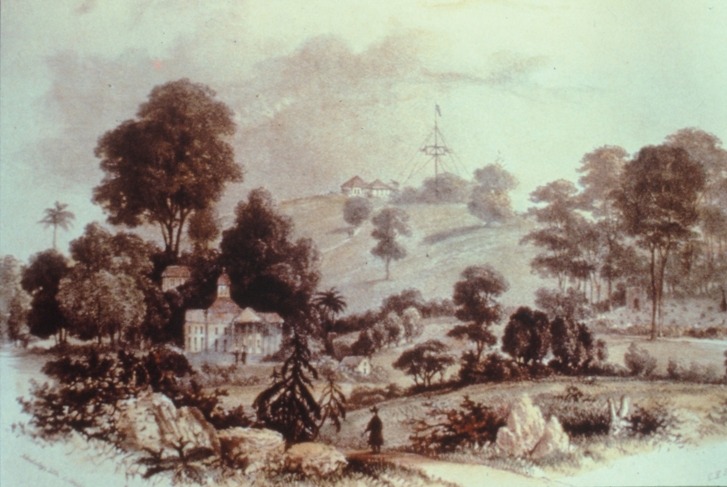
The Gardens at its present site was started in 1859 by a second Agri-Horticultural Society made up of “public spirited citizens”. They acquired a 23-hectare tract of abandoned plantation land at Tanglin from one of their founders, Whampoa (Hoo Ah Kay), and hired Lawrence Niven to create a leisure garden and ornamental park. Lawrence Niven oversaw the landscaping and designed the lay-out of the Gardens in the English Landscape Movement’s style. Many of the features, such as the bandstand hill, ring roads, swan lake and the main gate, remain till today. The Gardens was further expanded by the purchase of two additional tracts of land amounting to 10 hectare in 1866, where the Society built a residential house for its superintendants (later Directors), now called Burkill Hall. In addition to organising flower shows and horticultural fetes, the Society also introduced a zoo to the Gardens, which grew to 140 animals including a leopard, monkeys, deer, kangaroos and emus.
During 1875–78, due to financial difficulties, the Society handed over management and maintenance of the site to the government who then undertook the business of serious reorganisation. The scientific mission of the Gardens evolved when the colonial government assumed management and deployed Kew-trained botanists and horticulturists to administer the Gardens
1859 : Establishment of the Gardens at Tanglin
The Gardens at its present site was started in 1859 by a second Agri-Horticultural Society made up of “public spirited citizens”. They acquired a 23-hectare tract of abandoned plantation land at Tanglin from one of their founders, Whampoa (Hoo Ah Kay), and hired Lawrence Niven to create a leisure garden and ornamental park. Lawrence Niven oversaw the landscaping and designed the lay-out of the Gardens in the English Landscape Movement’s style. Many of the features, such as the bandstand hill, ring roads, swan lake and the main gate, remain till today. The Gardens was further expanded by the purchase of two additional tracts of land amounting to 10 hectare in 1866, where the Society built a residential house for its superintendants (later Directors), now called Burkill Hall. In addition to organising flower shows and horticultural fetes, the Society also introduced a zoo to the Gardens, which grew to 140 animals including a leopard, monkeys, deer, kangaroos and emus.
During 1875–78, due to financial difficulties, the Society handed over management and maintenance of the site to the government who then undertook the business of serious reorganisation. The scientific mission of the Gardens evolved when the colonial government assumed management and deployed Kew-trained botanists and horticulturists to administer the Gardens.
1875 : Superintendents from Kew
A request was made from the colonial government to the Royal Botanic Gardens, Kew for a qualified superintendent with a strong background in botany to manage the expanding Gardens. In 1875, Henry James Murton, a skilled and avid horticulturist, became the first of the many Kew-trained men to devote years of professional and personal service to convert the Agri-Horticultural Society’s park into a working botanic garden.
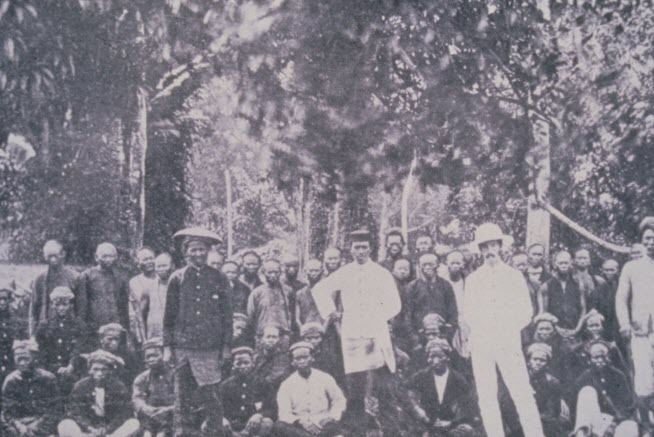
Murton can be credited with laying the foundations for a botanical institution. He set up a system of plant exchange with other botanical institutions worldwide, introduced a herbarium and library, and in 1879, obtained an additional 41.3 hectare for an Economic Garden to the north of the Gardens. His experimentation with economic plants saw the establishment of coffee as the first major agricultural industry in Malaya.
Nathaniel Cantley, who was also trained at Kew, subsequently replaced Murton in 1880. Cantley continued to improve on the Gardens, and was responsible for building new facilities such as the office (now Ridley Hall), the Plant House, an arboretum in the Economic Garden and plant nurseries. An avid botanist, Cantley placed the Gardens on a firm systematic footing and made an extensive collection of herbarium specimens from Singapore and the region, many of which can be found in the SING herbarium today. Cantley was also appointed as the first Superintendent of the Forest Department, and was responsible for surveying and gazetting the first forest reserves in Singapore and the Straits Settlements.
1888 : Ridley and the Malayan Rubber Industry (from 1896)
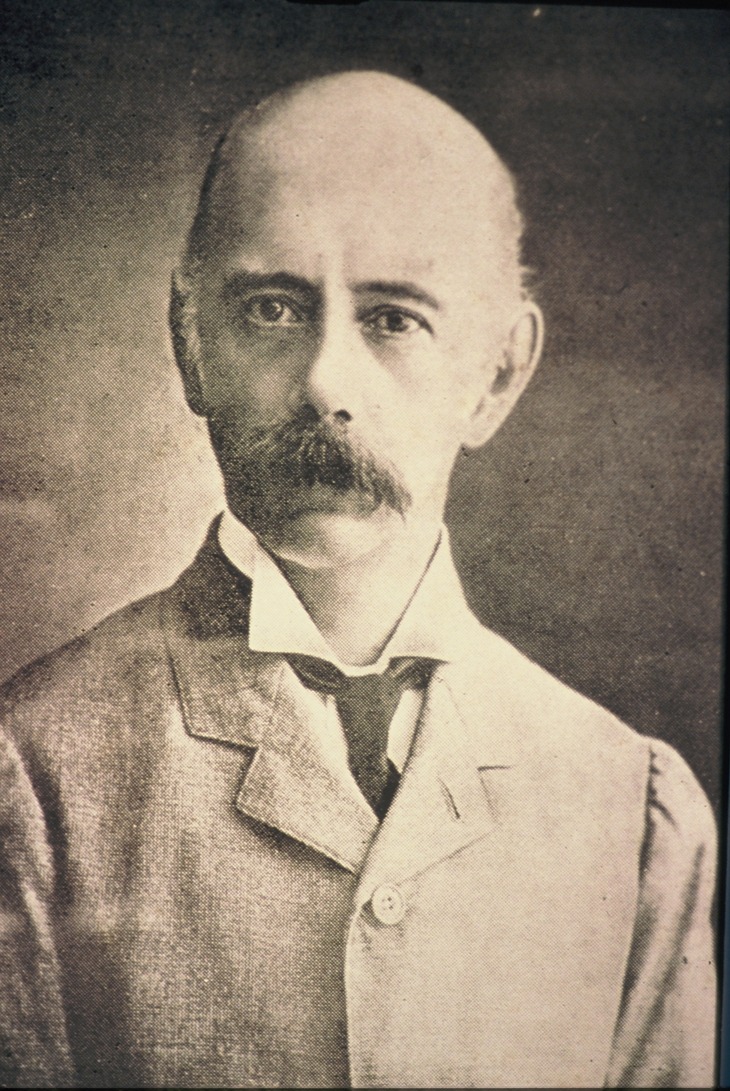
The Gardens' first Director, Henry Nicholas Ridley, subsequently came to the Gardens in 1888 and worked tirelessly for the next 23 years to usher the Gardens into the twentieth century and its most productive period historically. His directorship was marked by a greater expansion of the Gardens’ roles and participation in botany, agriculture and forestry. In particular, he was responsible for publishing the definitive Flora of the Malay Peninsula, the establishment of the economic garden as the premier experimental ground for tropical economic crops and placing the Singapore Botanic Gardens as a credible botanical authority through its scientific publications. Ridley continued his prodigious botanical work until beyond retirement, and published over 500 books and scientific papers covering some 10,000 printed pages. He is reckoned to have described 4,000 plant species new to science.
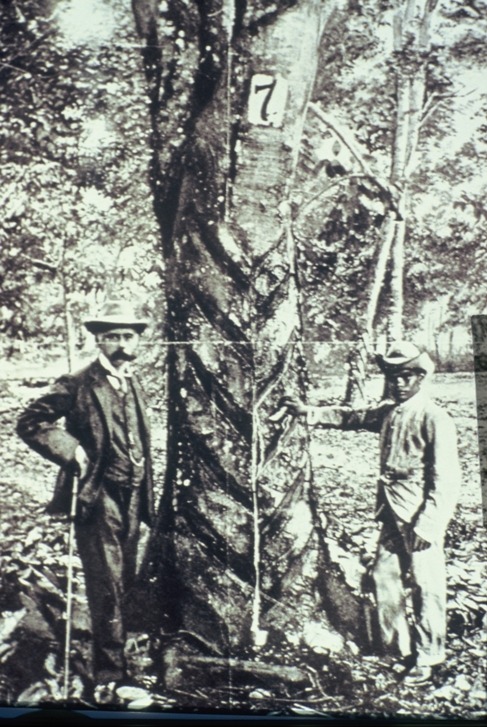
One of Ridley’s most significant contributions while at the Singapore Botanic Gardens was pioneering Malaya’s rubber industry. Ridley zealously researched the commercial possibilities, including the various methods to tap the tree’s latex without causing permanent harm to the tree and preparing the latex for sale. While his persistence in persuading Malaya's planters to grow rubber trees (Hevea brasiliensis) may have earned him less than flattering nicknames such as 'Mad Ridley' and 'Rubber Ridley', Ridley’s efforts saw rubber become the major cash crop of the region when the existing coffee plantations were devastated by disease. The Gardens' revenue multiplied greatly as the region became a major market for the rubber trade and the Gardens, the principal source of seed for establishing new plantations. By 1920, Malaya was producing over half the world’s rubber, and rubber is still an important crop for the region until today.
Vanda Miss Joaquim originated from the garden of Agnes Joaquim, an Armenian lady residing in Singapore. In 1893, the first scientific director of the Singapore Botanic Gardens H. N. Ridley recorded the following in the Gardeners’ Chronicle: “A few years ago Miss [Agnes] Joaquim, a lady residing in Singapore, well-known for her success as a horticulturist, succeeded in crossing Vanda Hookeriana and V. teres, two plants cultivated in almost every garden in Singapore.”
1912 to 1925: The Years of Specialisation in Research
Isaac Henry Burkill replaced Ridley and became the second director of the Gardens. He maintained Ridley’s work on plants of economic value despite the intervening First World War, which saw funds and supplies drastically reduced. Burkill is best remembered for his monumental Dictionary of the Economic Products of the Malay Peninsula (1935). Still the most comprehensive text on the historical uses of tropical plants with 36,000 entries, it was reprinted in a two-volume set in 1968 and again more recently in 2004. He also wrote the first history of the botanic gardens and published it in the Gardens Bulletin (1918–1921), the basis for much of what has subsequently been written about the early years of the Singapore Botanic Gardens.
The Economic Garden continued to be a source of supply of economic crops until the land was taken over for the construction of a campus for Raffles College at the beginning of the 1920s, a transaction that reduced the size of the Botanic Gardens by more than half. Determined to recast the Gardens into a centre for research in systematic botany, Burkill turned his attention to enhancing the Herbarium and Library collections. He employed talented botanists and created the post of Herbarium Curator, hence shifting focus toward taxonomic research and making the Gardens independent scientifically from the Botanic Gardens at Calcutta and Kew.
1928: Holttum and Orchid Breeding & Propagation
Richard Eric Holttum took up the post of Assistant Director between 1922 and 1925, and assumed directorship of the Gardens from period 1925 to 1949. As the Director, Holttum set himself the task of improving its horticultural displays by introducing many new colourful ornamental and flowering plants, and generally improving the Gardens’ horticultural practices.
In 1928, Holttum set up laboratories and conducted the first experiments in orchid breeding and hybridisation. The results of these experiments, free flowering and hardy orchid hybrids, laid the foundation for the multi-million dollar cut flower industry. Since then, outstanding hybrids have been cultivated in the Gardens and have received recognition worldwide.
Holttum was also interested in plants of horticultural value that would flower regularly in the seasonless tropical climate, and was responsible for introducing flowering trees and shrubs such as the Bougainvillea and Plumeria from other tropical regions of the world to Singapore’s parks and roadsides. Holttum was also the first Gardens’ administrator to recruit local officers for horticultural training. The status of horticulture grew as a principal activity of the Gardens and of the larger community it served during his tenure.
Another notable personality was Edred John Henry Corner, a gifted botanist and prolific writer who served as Assistant Director under Holttum between 1929 and 1946. He is popularly remembered for enlisting berok or pig-tailed monkeys (Macacus nemestrina) to collect twigs, flowers, fruits and epiphytes from the less accessible reaches of tall forest trees for his research. Corner was also reputed to be a most respected and inspiring lecturer in natural history and conducted classes on Malayan plant life and systematic botany for the public. He was also the Professor of Biology at the King Edward VII College of Medicine from 1931–32.
1942 to 1945: The Japanese Occupation
Prior to the Japanese invasion, the Gardens’ attention had turned to the impending outbreak of war. Most of the senior staff had been assigned to other duties under the Department of Food Control and Information and demonstration plots of vegetables were maintained to encourage food production among the public.
Within a few days of the Japanese occupation, Professor Hidezo Tanakadate of Tohoku University assumed control of the Gardens and Museums, and asked some of the senior staff, such as Holttum and Corner, to resume their work in the Gardens. Other staff members were not as fortunate, and were sent to work on the Siam-Burma Railway, where many lost their lives. After nearly a month’s reparation work on house and grounds during the Japanese Occupation, the Gardens managed to collect itself and regain its calm centre of research activity. This was made possible because the Gardens and Japanese staff shared a common goal and belief in preserving the cultural and scientific heritage of Singapore.
Kwan Koriba, Botany Professor from the Imperial University of Kyoto, took over Holttum’s duties as Director in December 1942. With a background in the relations between plant behaviour and climate, Koriba immersed himself in research on the growth habits of selected Malayan trees using both the Garden’s Rain Forest and the Nature Reserves and produced a scientific paper entitled “Periodicity of Tree-growth in the Tropics”. Holttum and Corner, relieved of their administrative functions, also devoted their attention entirely to further research.
It was the Gardens’ staff and their captors’ combined efforts during the turbulent years of the Japanese Occupation that have allowed for the preservation of the Gardens and its invaluable research properties despite the difficulties of war. During the war, a set of brick steps down to the Plant House were built using bricks made and installed by allied prisoners of war (PoWs), which can still be seen today. In August 1995, upon the 50th anniversary of the cessation of hostilities, a group of veteran PoWs from Australia came to the Gardens to examine the steps they had built with bricks marked with arrows.
1945: Post-war Years through Independence
The immediate post-war years were fraught with difficulties as terrorist activity in the Federation of Malaya and a shortage of staff limited botanical work. Professor Holttum retired from the Gardens in 1949 to head the Department of Botany at the newly established University of Malaya in Singapore. Henderson, who had served as Assistant Director since 1946, was then promoted to Director and he filled that position until the arrival of John William Purseglove in 1954. In response to Singapore’s growing enthusiasm for orchids, Purseglove established an Orchid Enclosure for orchid display, the precursor to the National Orchid Garden developed decades later.
Humphrey Morrison Burkill, son of I.H.Burkill, was appointed Director after Purseglove retired in 1957. H.M.Burkill had been born in the Director’s House in the Gardens; thus the second generation of Burkills took charge of the Gardens until 1969. Burkill saw the Gardens through the crucial transition from British leadership to “Malayanisation” – with a staff shortage so severe that three officers were struggling to cover nine senior posts. As early as 1955, the first steps had been taken to constitutionally transform Singapore from a colonial territory staffed by colonial civil servants to full independence. New local officers were sent overseas for training and a scheme was devised in cooperation with the University of Malaya to attract foreign research botanists to Singapore to help offset the staff shortage and stimulate more interest in local botany.
Burkill took it upon himself to personally see that the Herbarium was properly housed in a new building to accommodate the thousands of plants specimens collected annually after plant collecting resumed in Malaya and Borneo. Burkill retired in 1969 and returned to UK where he was awarded the OBE (Order of the British Empire) by the UK government.
The 1950s to early 1960s also saw Holttum, Corner and other staff members’ war years’ research being published, hence bringing renewed attention to the important work of the Gardens.
The Greening of Singapore
By the mid 1960s, the Gardens had taken a leading role in the greening of Singapore. In 1963, then Prime Minister Lee Kuan Yew launched the first Tree Planting campaign with an emphasis on providing shade and greenery. This was followed in 1967 by the “Garden City” campaign, and in November 1971, these efforts to beautify Singapore culminated in the first “Tree Planting Day,” now an established tradition celebrated annually in Singapore. To meet the need for urban landscapes and recreational areas, the Gardens' staff became involved in supplying planting material and in plant introduction to increase the variety and colour in roadside and park plantings.
The early 1970s also saw the establishment of a new Tissue Culture Laboratory to assist local orchid growers and breeders and help cultivate Singapore’s increasing enthusiasm for orchid hybrids. The School of Ornamental Horticulture was also opened in 1972 at Burkill Hall to meet the growing demand for technical expertise in horticulture. In 1976, the Gardens merged with the Parks and Trees Branch of the Public Works Department to form the Parks and Recreation Division under the Ministry of National Development.
1989 to 2006: The Gardens Renewed: Masterplan for Redevelopment
Dr Tan Wee Kiat served as the Director of the Gardens from 1988 to 1996. His vision of realising the Gardens’ full potential as a botanical and cultural institution resulted in the formulation of the Masterplan for Redevelopment. A key feature of the plan was the “Three Core Concept”, which divided the Gardens into the Tanglin Core, Central Core and Bukit Timah Core – each offering distinct attractions with independent access.
This period saw the creation of several iconic destinations that remain visitor favourites today: the Eco-Garden, Visitor Centre, National Orchid Garden and Shaw Foundation Symphony Stage. When the National Parks Board was established in 1990, Dr Tan served as Chief Executive Officer whilst continuing to oversee the Gardens' evolution.
Dr Chin See Chung succeeded Dr Tan in 1996 and continued implementing the Masterplan, adding attractions such as the Cool House, Ginger Garden, Jacob Ballas Children's Garden and Evolution Garden. The Botany Centre houses the Gardens’ Herbarium and Library collections, research laboratories, and public viewing galleries that offer visitors glimpses into ongoing scientific work.
Through these developments, the Masterplan transformed the Gardens into a vibrant centre for active recreation, education, conservation and research, strengthening our role as Singapore’s foremost garden for public enjoyment and botanical science.
2007 to Present: Growing a World Class Botanic Gardens
Building on these strong foundations, the Gardens continues to grow and evolve to ensure that our landscapes, collections and display remain relevant to the needs of the community it serves. Under the directorship of Dr Nigel Taylor (2011-2019) and Dr Tan Puay Yok (2019 to present), the Gardens saw numerous enhancements and additions.
The Bukit Timah Core saw the addition of new thematic gardens introducing visitors to diverse plant collections: the Healing Garden (2011), Fragrant Garden and Foliage Garden (2013), Ethnobotany Garden and Centre for Ethnobotany (2018), and the Seed Bank (2019).
Major enhancements to the National Orchid Garden were completed in 2021 with the Tropical Montane Orchidetum, including the redevelopment of the Tan Hoon Siang Mist House, Yuen Peng McNeice Bromeliad Collection and the Sembcorp Cool House. These enhancements further expanded our capabilities in orchid breeding, conservation and research.
The Tyersall-Gallop Exension makes up the Gardens’ newest zone. Completed between 2017 and 2022, the Learning Forest and the Gallop Extension formed natural extensions to the Gardens’ existing Rain Forest, creating a larger forest habitat that strengthens the conservation of native flora and fauna. The combined 18 hectares of the new zone bring the total size of the Gardens to 82 hectares. The additional land also provided the impetus for the Gardens to launch the Tropical Forest Ecology Research Programme.
Heritage interpretation efforts were enhanced through the Heritage Museum (2013) and Heritage Garden (2016). In 2023, the Heritage Museum reopened to visitors after its exhibits were refreshed to highlight stronger focus on the Gardens’ contributions to the environmental, social and economic development of Singapore.
The inscription of the Gardens as a UNESCO World Heritage Site (opens in new tab)in 2015 affirmed the Gardens’ outstanding heritage and cultural value. To celebrate this legacy, the Gardens’ Heritage Festival was introduced in 2016. This annual event features performances and activities that encourage the public to enjoy and deepen their appreciation of the Gardens’ history and cultural heritage.
In 2025, the Gardens celebrated multiple milestones through year-long festivals, exhibitions and community initiatives, commemorating 10 years of UNESCO World Heritage Site status, 150 years of our Herbarium and Library of Botany and Horticulture, and 30 years of the National Orchid Garden.