
Nature Areas
The Gardens’ nature areas support biodiversity through carefully managed habitats that balance conservation and research.
Last updated on 20 May 2026
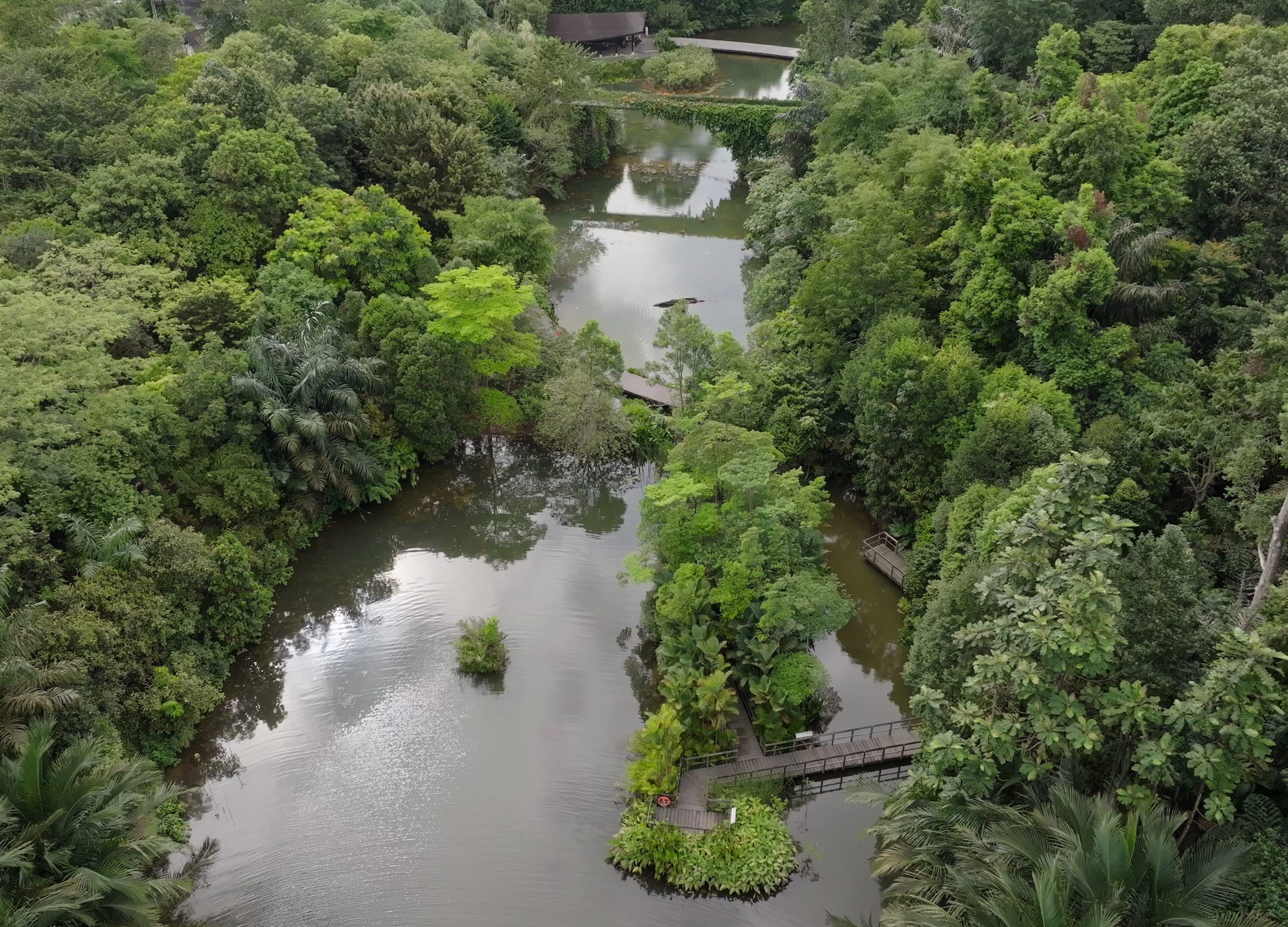
The Singapore Botanic Gardens is not just a manicured garden, but also a hotspot for biodiversity in the country.
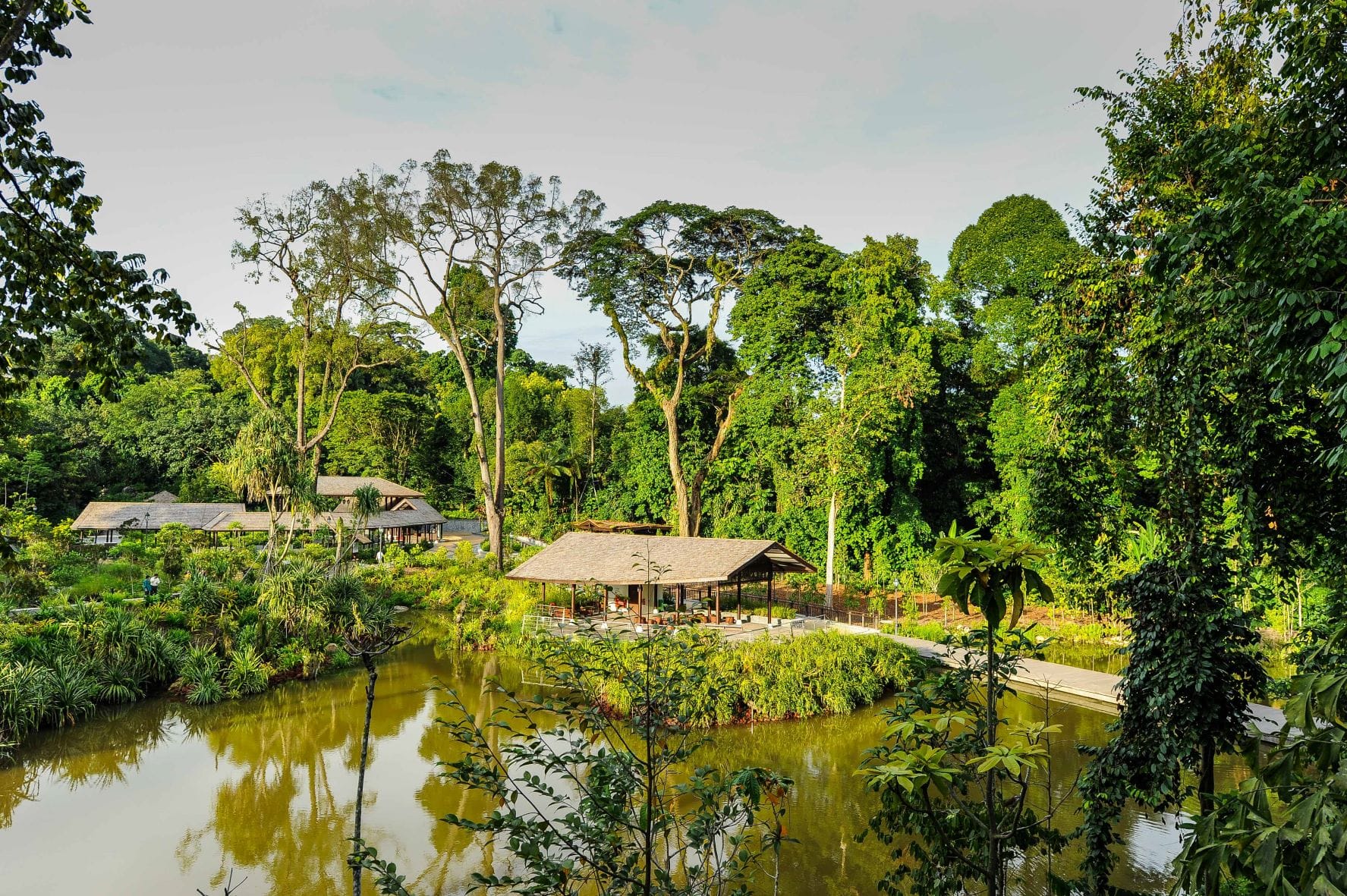
A primary patch of lowland rainforest is still thriving within the Gardens — a site of tremendous scientific value due to the diversity of species documented here. With the addition of the Tyersall-Gallop Core, it forms a continuous stretch of 24 hectares of Nature Area within the Gardens. Together with our prominent lakes, these Nature Areas are popular stopovers for migratory birds each year.
Both floristic and faunal surveys are routinely carried out to monitor biodiversity. Strict regulations are in place to minimise disturbances to these sites during operational work and after dark. The Gardens also work closely with researchers on native species reintroductions to the Nature Areas.
Visitor Information
Opening hours for Learning Forest
5am - 12 midnight daily
Opening hours for The Rain Forest
7am - 7pm daily
Opening hours for Gallop Extension
7am - 7pm daily
After-Hours Wildlife Sanctuary (7pm to 7am)
The following areas are closed every night to maintain a conducive habitat for local wildlife:
The SPH Walk of Giants
Keppel Discovery Wetlands
Botanist Boardwalk
Pulai Marsh Trails
Limited access during inclement weather
To ensure visitor safety, parts of the nature areas may be temporarily closed during or following severe weather conditions, including heavy rain and strong winds.
No Pets Zone
These are designated nature areas where extra protection is needed for the flora and fauna to thrive.
The Rain Forest
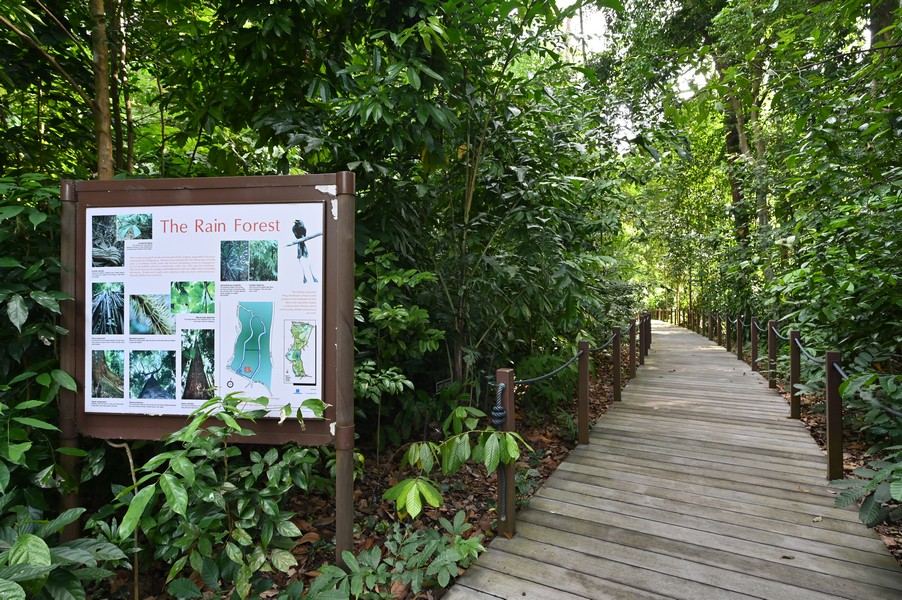
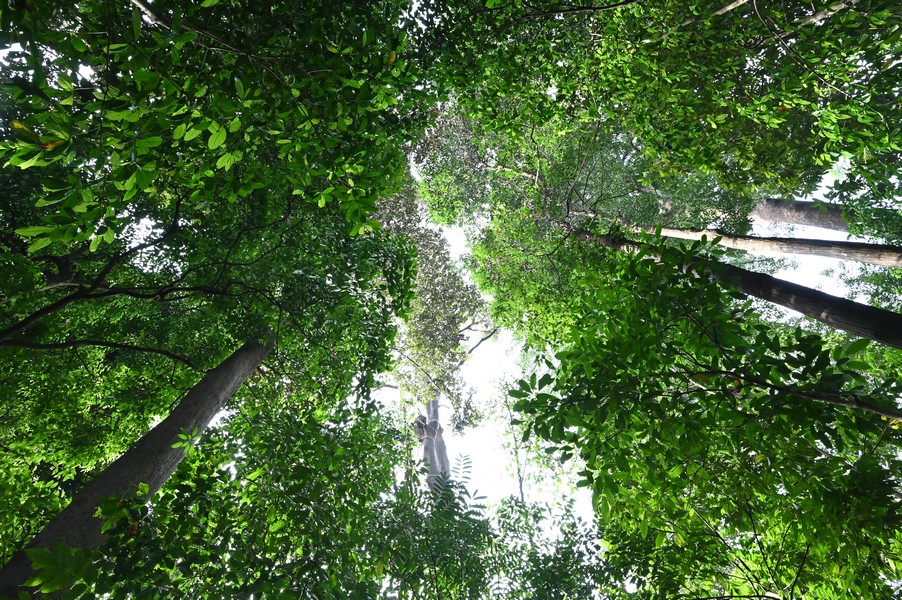
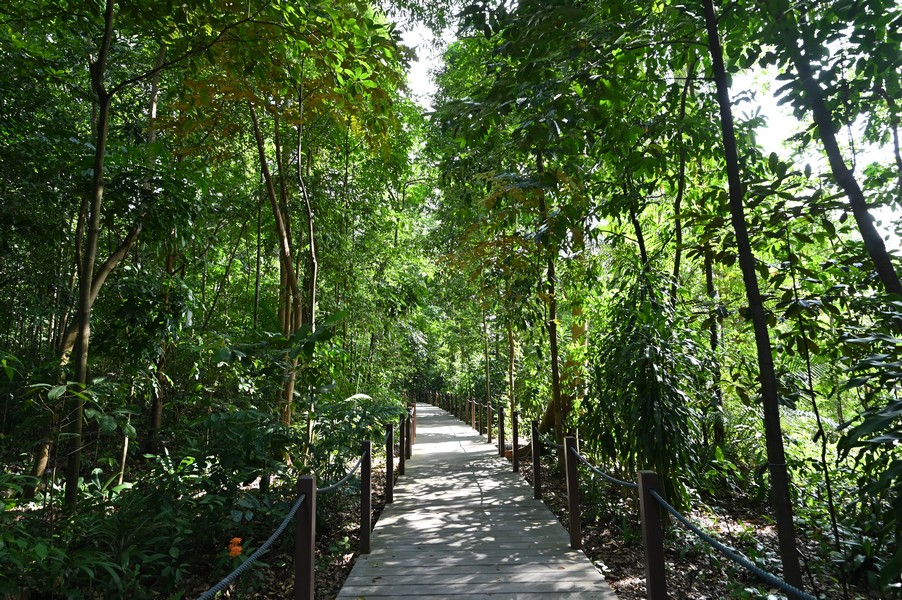
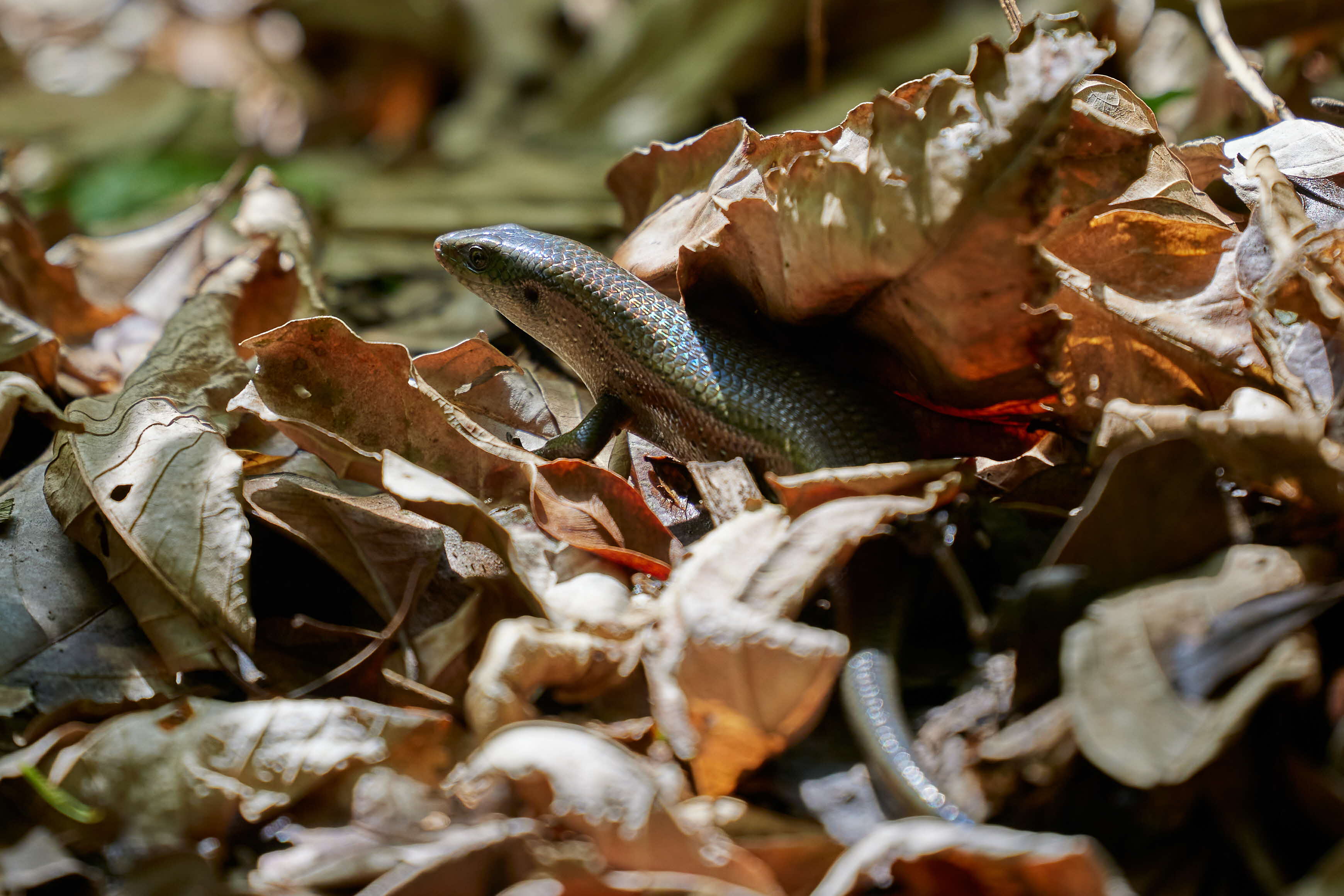
The Singapore Botanic Gardens Rain Forest is a remnant of the original tropical lowland forest that once extended across the island. Today, it is the only rainforest fragment outside of the Nature Reserve, spanning just 6.2 hectares yet boasting remarkable diversity.
This key nature area serves as a sanctuary for over 300 flora species, with nearly 80% being rare or endangered.
In addition to its rich flora, the Rain Forest is home to a diverse array of fauna, including over 20 species of birds, 15 species of reptiles and amphibians, and a handful of mammals.
In recent years, the Rain Forest has been enhanced through intensified planting of native trees and has become a site for species restoration and research.
Learning Forest
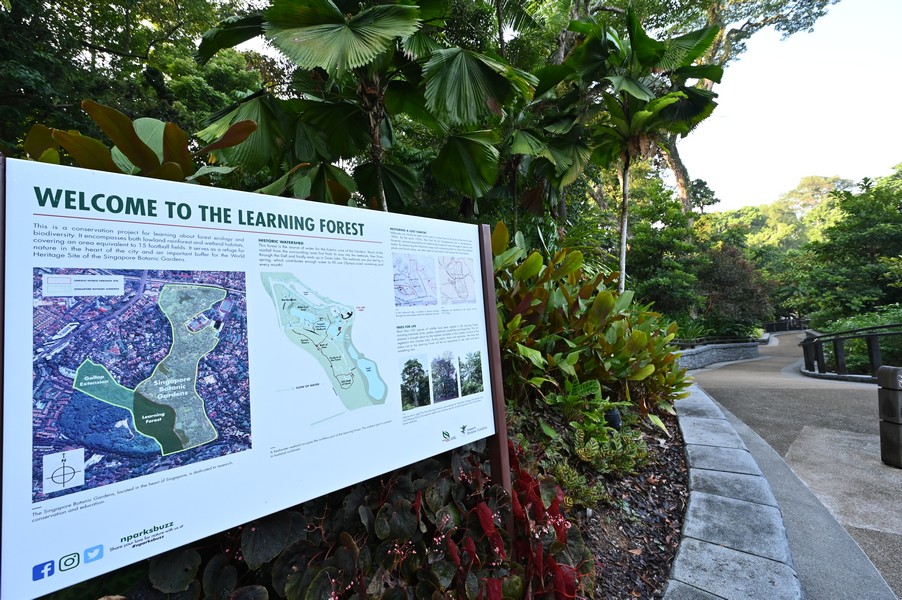
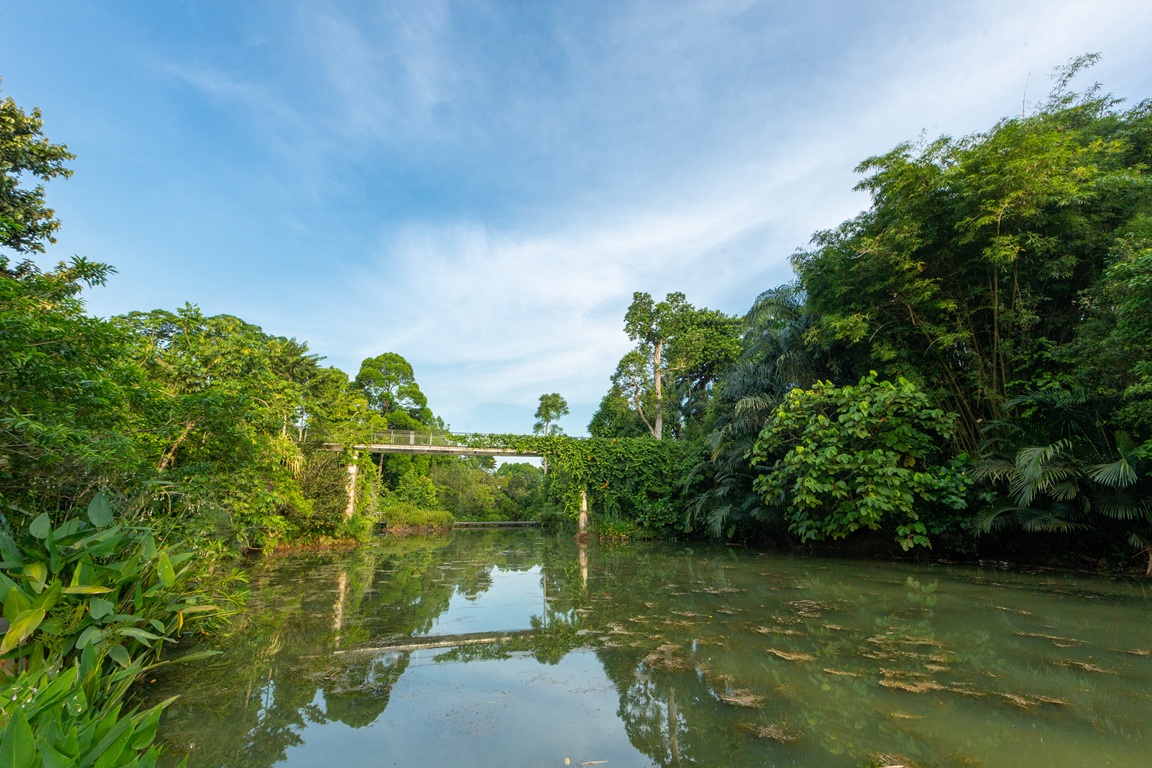
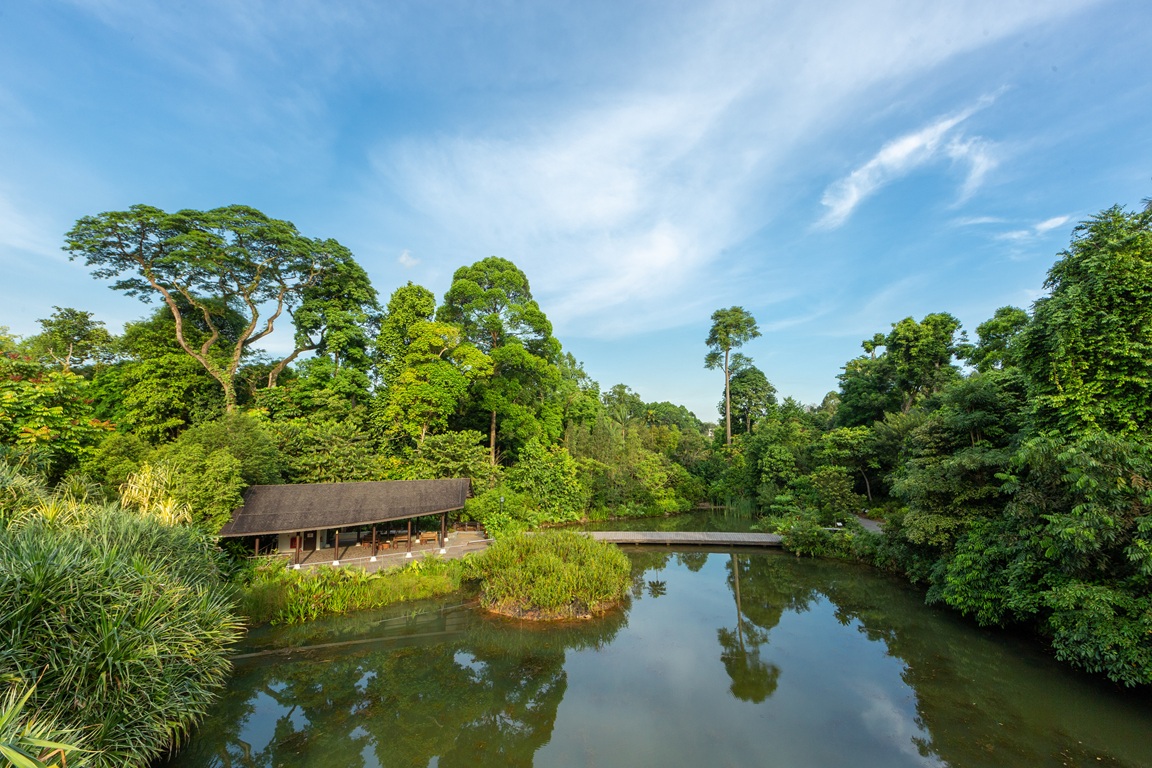
Opened in 2017, the Learning Forest features a collection of over 500 plant species set within a naturalistic landscape. Occupying over 4 hectares is the Southern Forest, a secondary rainforest retained since the development of the Learning Forest. Today, it serves as an active site for habitat enhancement programmes to reintroduce native tree species.
The SPH Walk of Giants takes visitors on elevated boardwalks through the forest, allowing observations at mid-canopy height without disturbing the fragile forest floor.
At the core of the Learning Forest is the Keppel Discovery Wetlands, a restored freshwater wetland habitat surrounded by endangered swamp species and collections recreated from Edred John Henry Corner's botanical expeditions to the freshwater swamp forests of Singapore and Peninsular Malaysia.
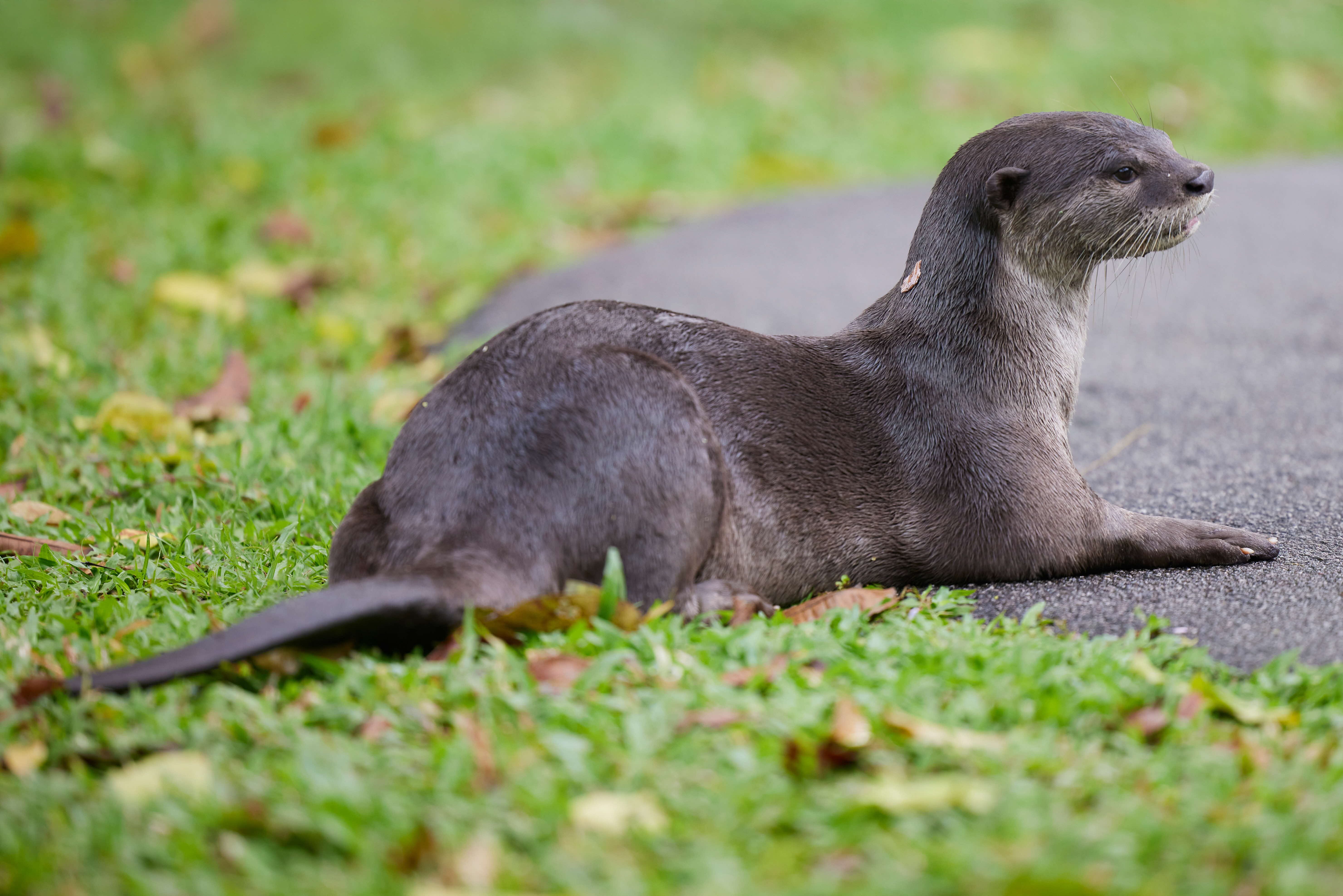
These include species from five major vegetation belts – Putat (Barringtonia spp.), Jejawi (Ficus spp.), Mempisang (Annonaceae spp.), Rassau (Pandanus spp.) and Pelawan (Tristaniopsis spp.). The Wetlands is a site for the conservation of aquatic fauna, a stopover for migratory birds, and home to smooth-coated otters that swim through its waters.
Gallop Extension
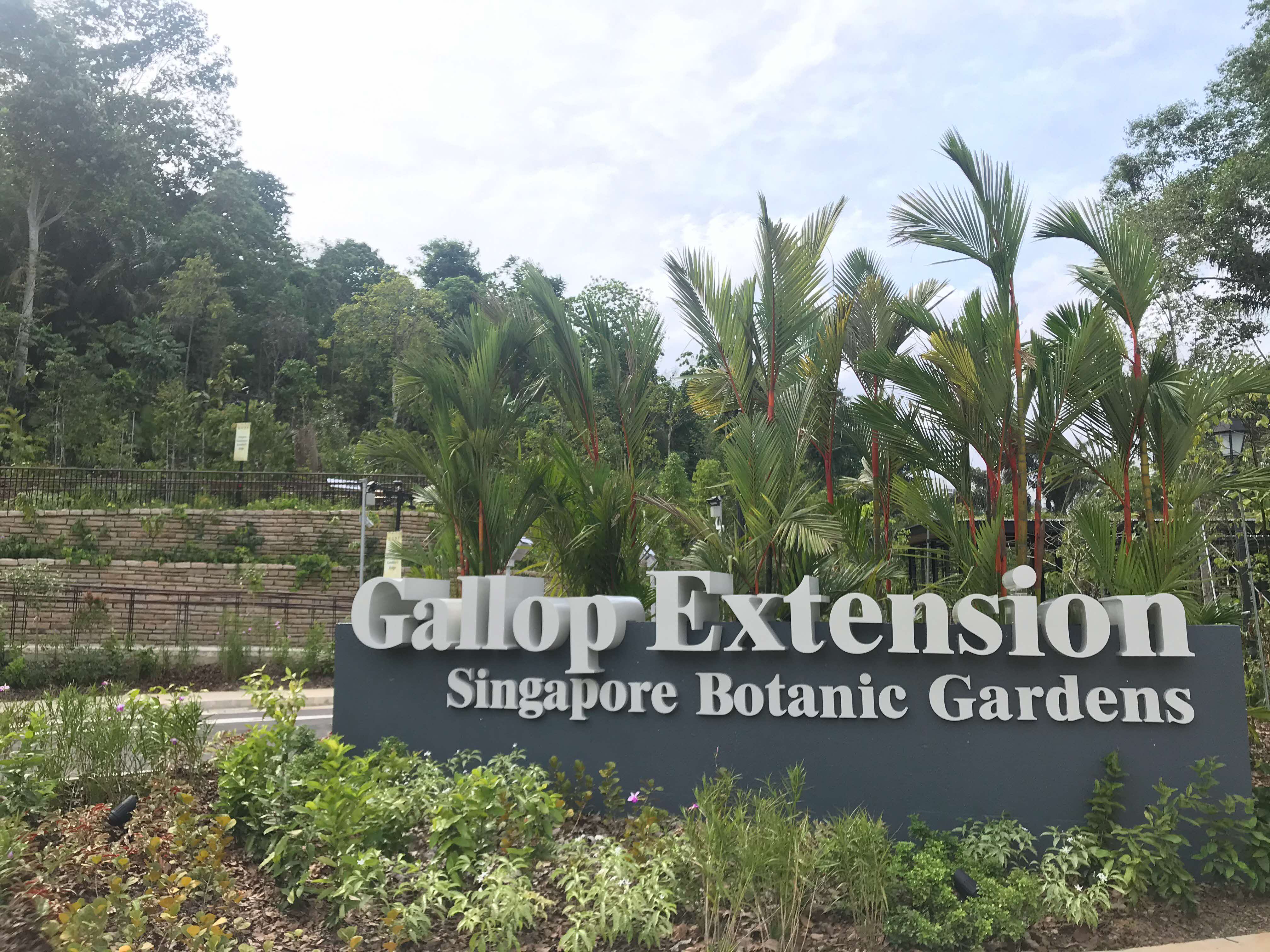
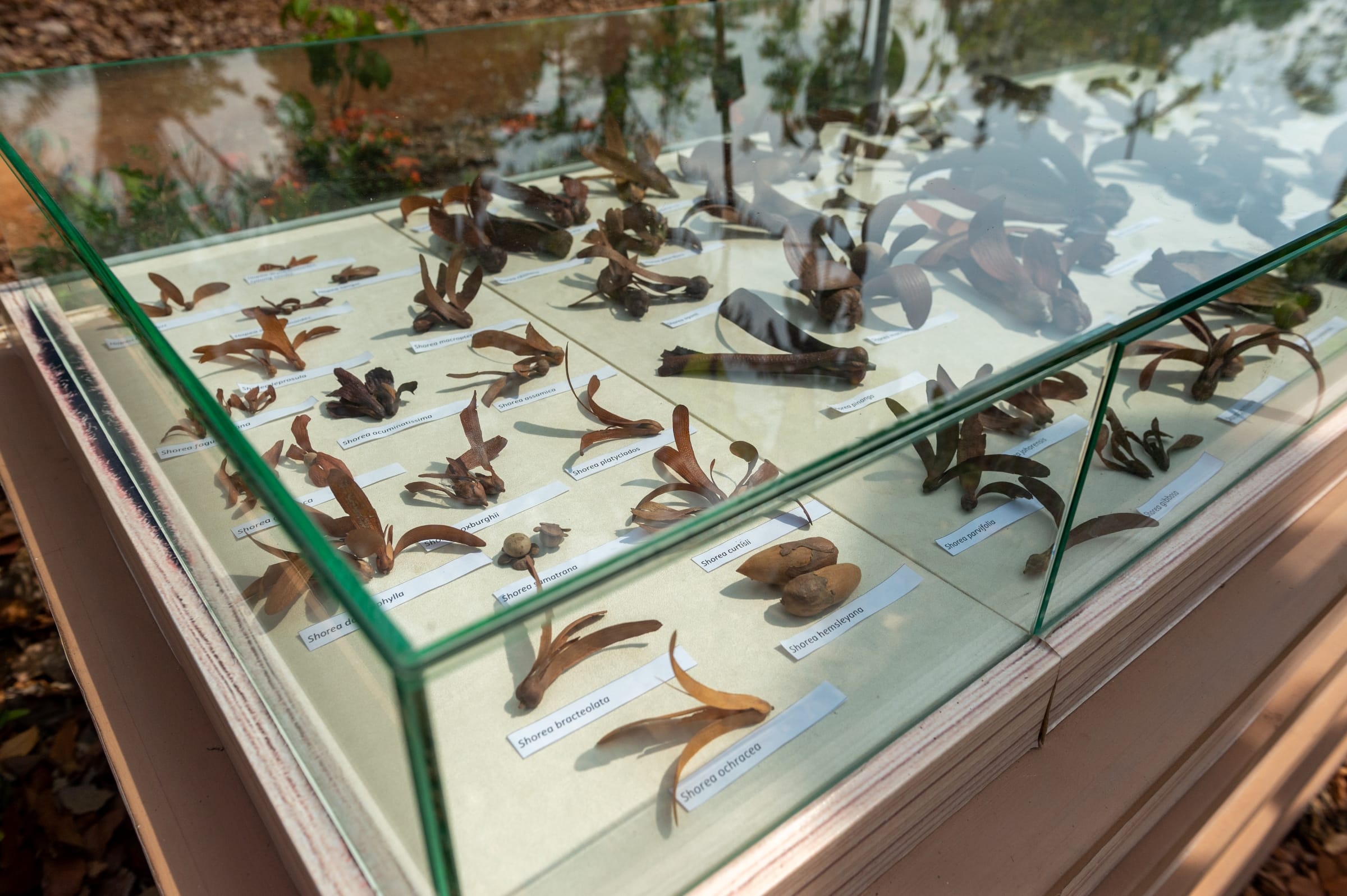
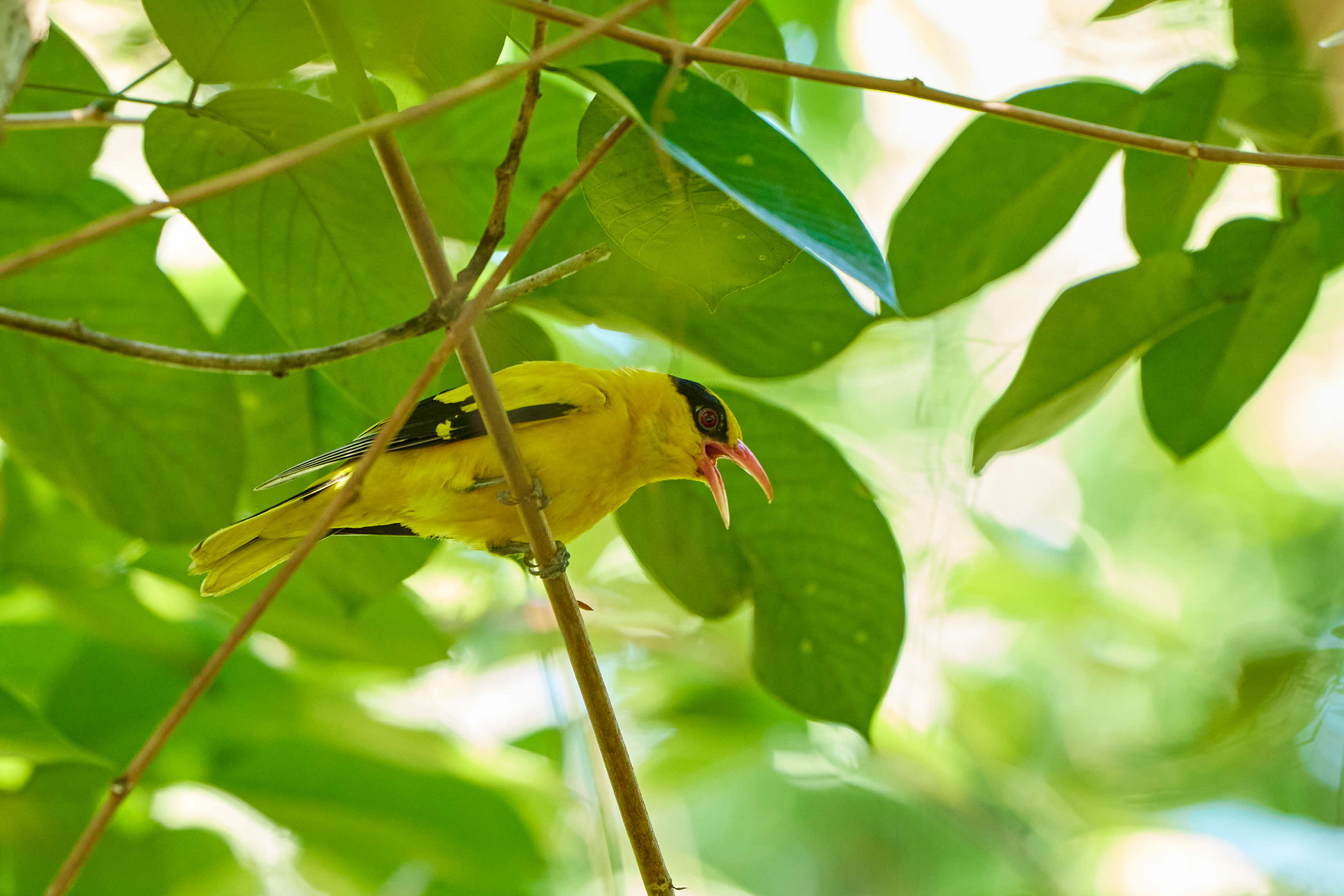
The Gallop Extension is an expanded conservation area that complements the Learning Forest and its surrounding landscape. Once occupied by residential estates and the French Embassy, this site has been revitalised into a thriving sanctuary for fauna and diverse plant habitats from Southeast Asia.
Winding footpaths and ornamental landscaping frame open lawns, thoughtfully designed to harmonise with the architecture and the land's natural contours. As a hub for public tours and education, the site fosters a deeper understanding of forest ecology and natural heritage. It is also a sanctuary for birdwatchers; the majestic, mature trees scattered across the grounds provide vital nesting sites for wildlife, including the Spotted Wood Owl and Grey-headed Fish Eagle.
Over 600 species (including hybrids) of plants can be found at the Gallop Extension.
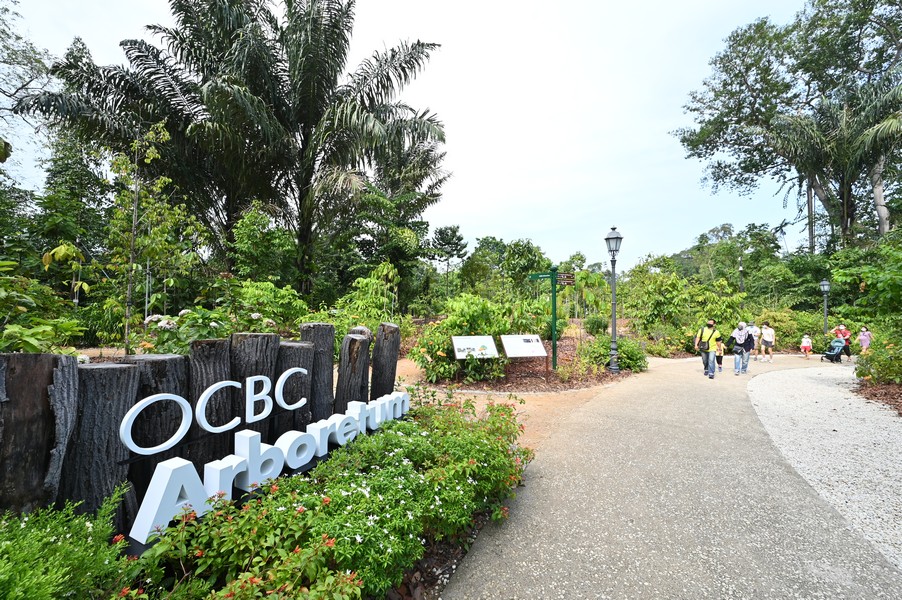
These include a collection of dipterocarp trees at the OCBC Arboretum — an important living collection of one of the most threatened plant families in Southeast Asia — as well as replications of tropical hill forests and heathland habitats at the HPL Canopy Link and Mingxin Foundation Rambler's Ridge, and lowland rainforests and riparian species throughout the rest of the site (Eco Zone).
A natural freshwater stream runs parallel to the Eco Zone, which was reforested in 2020.
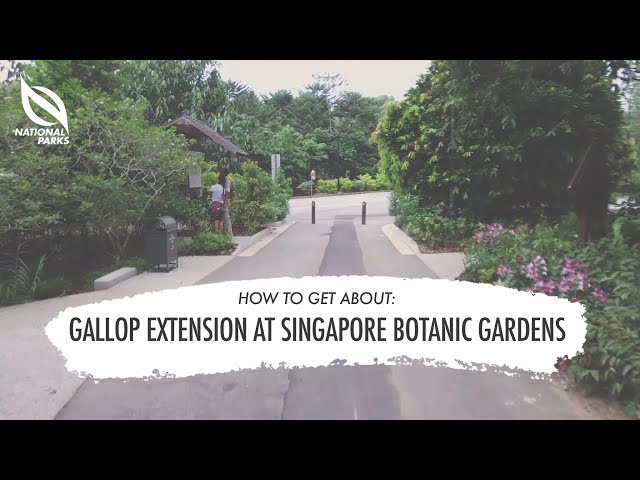
Getting to the Gallop Extension
Find Your Way to the Gallop Extension
Navigate with Google Maps
Vehicular Access Limitations
Please only enter via Holland Road and Tyersall Avenue.
There is no access via Cluny Park Road / Tyersall Road / Bukit Timah Road.
Arriving by Car or Taxi
From Holland Road (Towards City)
Turn left into Tyersall Avenue
Turn left into Gallop Gate entrance OR Turn right into Tyersall Gate entrance
From Holland Road (Towards Ulu Pandan Road)
Turn right into Tyersall Avenue
Turn left into Gallop Gate entrance OR Turn right into Tyersall Gate entrance
The nearest pick-up & drop-off point is at Gallop Gate. Parking is available at Gallop Gate and Tyersall Gate. Parking charges apply.
Arriving by Public Bus (Holland Road)
The following bus services operate along Holland Road.
SBS Bus No. 7, 105, 123, 174, 174e
Tower Transit Bus No. 77, 106
Depending on your traveling direction, alight at either:
Before Tyersall Avenue bus stop 13029, or
After Ministry of Foreign Affairs bus stop 13021
The Gallop Extension will be a 12-minute walk from the respective bus stops.
Arriving by Public Bus (Dunearn Road and Bukit Timah Road)
The following bus services operate along Dunearn Road and Bukit Timah Road.
SBS Bus No. 48, 66, 151, 153, 154, 156, 170, 186
SMRT Bus No. 67, 171
Depending on your traveling direction, alight at either:
Botanic Gardens Station bus stop 41021 (along Bukit Timah Road), or
Opposite Botanic Gardens Station bus stop 41029 (along Dunearn Road)
The Gallop Extension will be a 30-minute walk from the respective bus stops.
Arriving by Public Bus (Farrer Road) - Enter via Woollerton Gate
The following bus services operate along Farrer Road.
SBS Bus No. 48, 93, 153, 165, 174, 186,
SMRT Bus No. 961, 961M
Tower Transit Bus No. 855
Depending on your traveling direction, alight at either:
Farrer Road Station Exit A bus stop 11119
Farrer Road Station Exit B bus stop 11111
The Gallop Extension will be a 15-minute walk from the respective bus stops.
Arriving by Mass Rapid Transit (MRT)
Thomson-East Coast Line
Alight at Napier MRT station (TE12).
Take Exit 1 as it leads directly to the Singapore Botanic Gardens (Tanglin Gate).
The Gallop Extension will be a 20-minute walk from the station's exit.
Circle Line & Downtown Line
Alight at Botanic Gardens MRT station (DT9/CC19).
Take Exit A as it leads directly to the Singapore Botanic Gardens (Bukit Timah Gate).
The Gallop Extension will be a 30-minute walk from the station's exit.
Circle Line
Alight at Farrer Road MRT station (CC20).
Take Exit A as it leads directly to the Gallop Extension (Woollerton Gate).The Gallop Extension will be a 15-minute walk from the station's exit.
Maps & Audio Guides
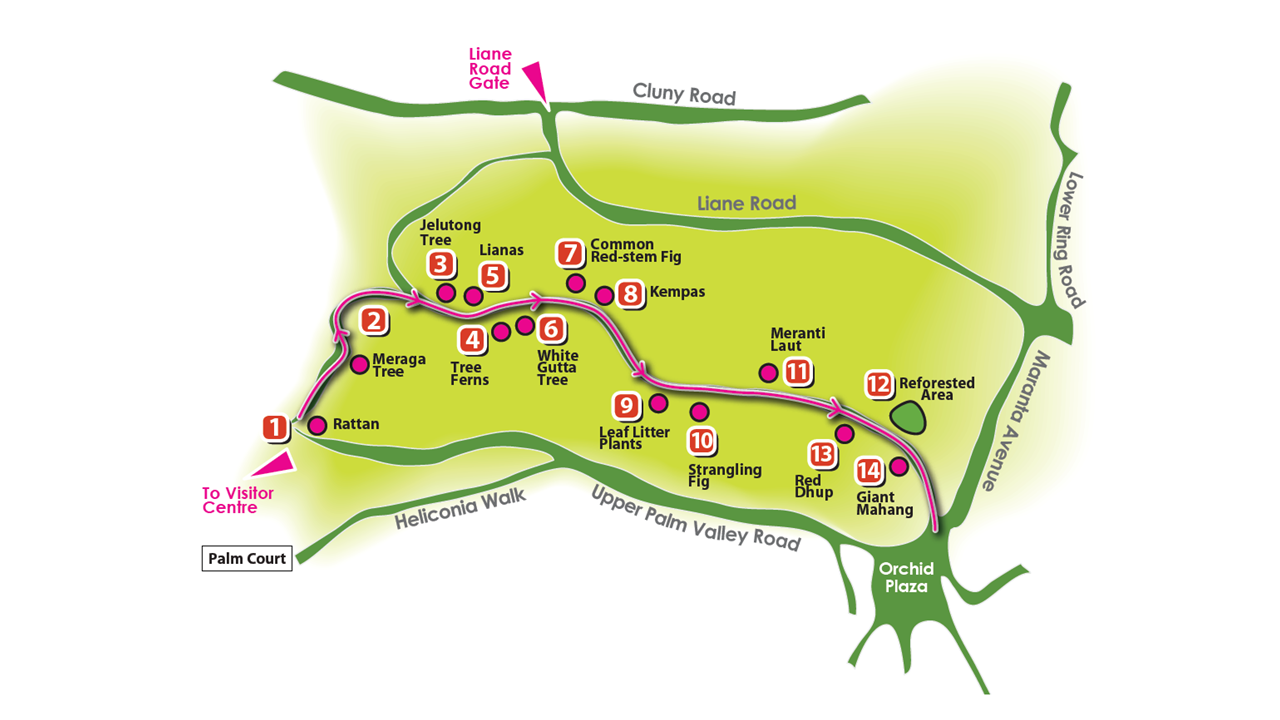
Trail Guide of Rain Forest
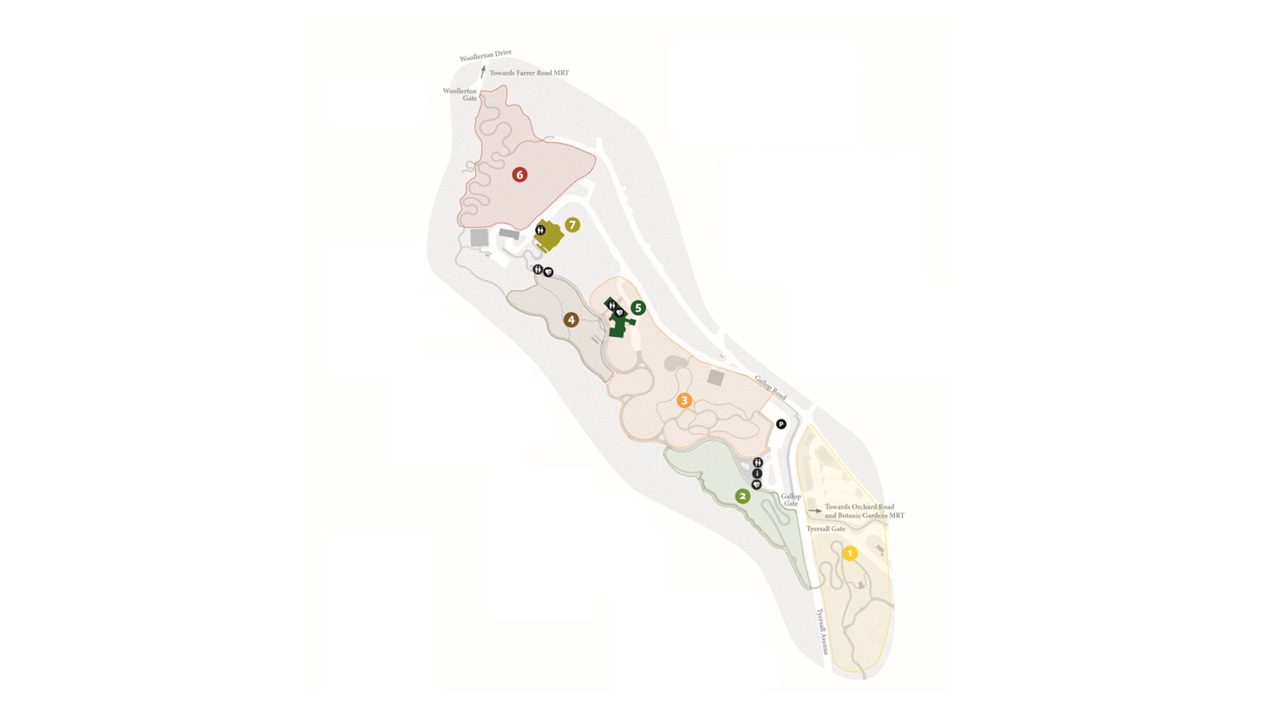
Map Brochure of Gallop Extension
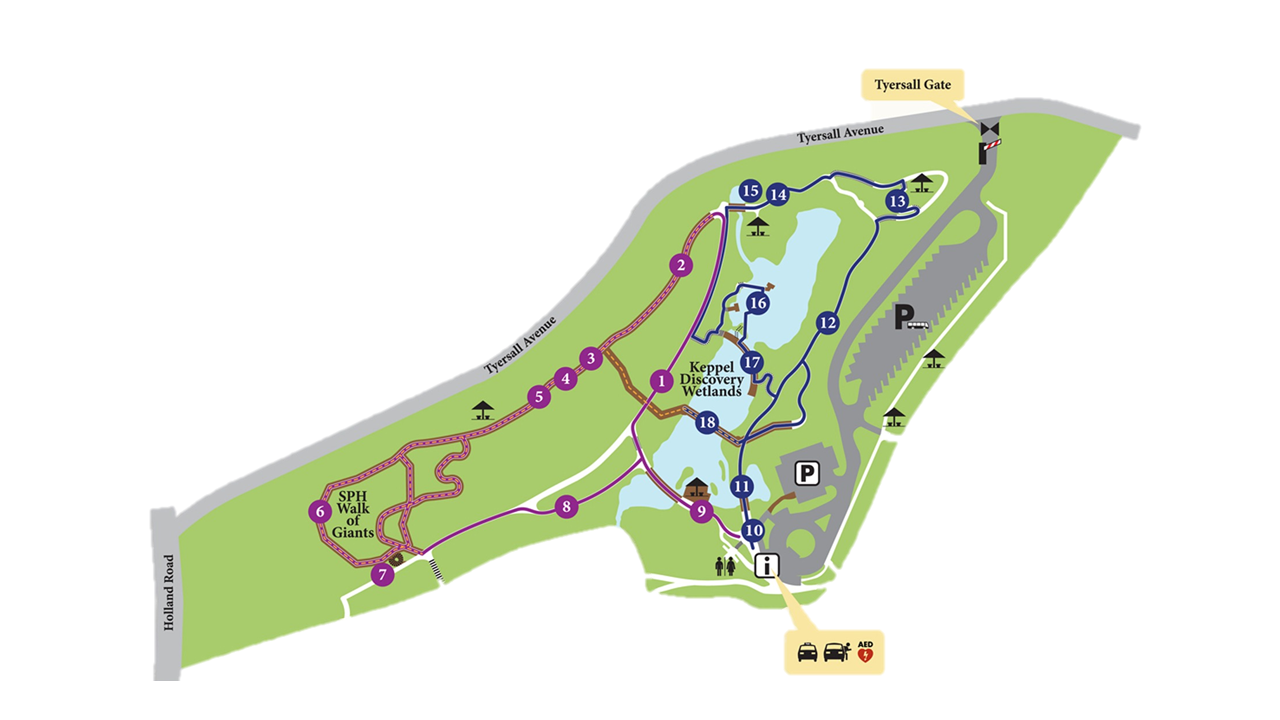
Map Brochure of Learning Forest

Learning Forest Audio Tour (Spotify)
To access the audio playlist, click here

Learning Forest Audio Tour (Map)
To access the audio tour map, click here.